

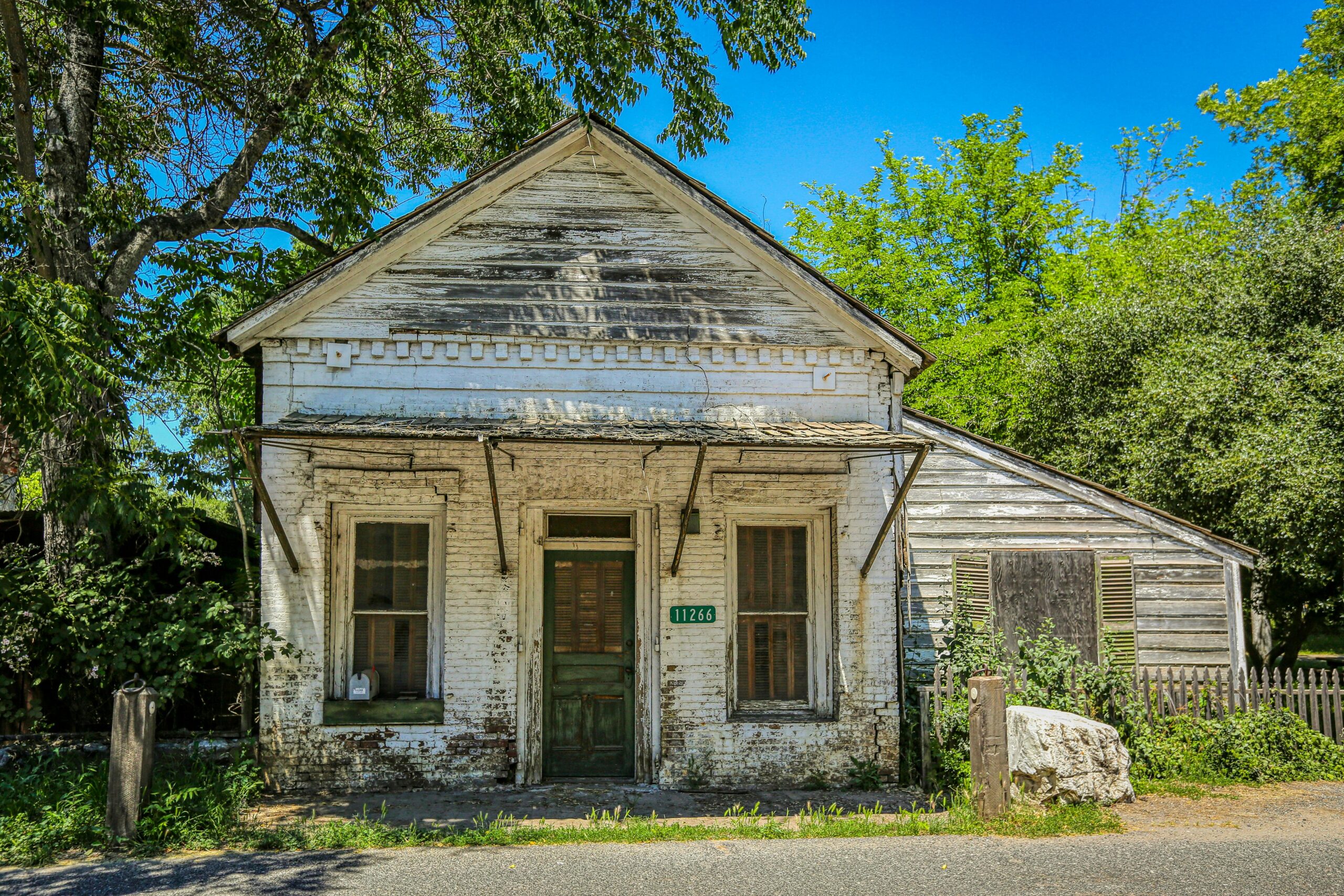
Older homes are abundant throughout California and they present limitless opportunities for keen flippers and developers.
Understand, a house doesn’t have to have been built in the 19th century to be considered old.
Much of California’s housing stock is old, constrained and renovation-dependent, having been built between anywhere from the 1940s to 1970s.
This includes:
Los Angeles County – large volumes of housing built between 1940s-1960s
Bay Area – significant pre-1970 housing stock, especially in infill suburbs
Sacramento & Central Valley – heavy 1950s-1970s suburban development
Many of these older homes are instantly recognisable from their facades.
They remain home to millions yet nearly all have layouts, systems and finishes which render them not just cosmetically dated but functionally obsolete.
Their existence presents countless value-add opportunities for flippers, even in slower markets.
The opportunity is basically market cycle-proof.
That’s because most buyers today strongly prefer renovated, turnkey homes rather than problems.
Why old housing stock favors flippers
When it comes to houses, there are two types of buyers – retail and flippers.
Retail buyers generally have a limited appetite for renovating and even encounter difficulty in gaining finance for distressed homes.
They may also have an emotional resistance to undertaking major upgrades which can even require moving out of the house and renting elsewhere.
Professional flippers are more than comfortable with full rehabs – it’s what they do.
They can underwrite risk and cost and their experience gives them a better understanding of permits, timelines and inspections.
Flippers are market problem solvers rather than speculators and old housing stock is a flipper’s fortune.
Renovation demand
Renovation demand is structural, not cyclical.
California’s housing crisis is an ongoing issue and hinges not just on availability and affordability but usability.
There is a chronic undersupply of new housing with an enormous, ever-rising cost and long timelines for ground-up constructions.
These new constructions cannot keep pace with demand and continue to encounter local resistance to density and redevelopment.
As a result, renovation is often the fastest way to create ‘new’ housing.
Flips act as a pseudo housing renewal mechanism.
How renovation scope is growing
Around 60% of US homes were built before 1980 and in California, that number is even higher, especially in coastal and inner-suburban markets.
The decade is significant because older homes built prior to the 80s generally pre-date:
- modern electrical standards
- energy efficiency codes
- open-plan layouts
- contemporary plumbing and HVAC expectations
It means that these houses are ripe for full-gut renovations that often include significant structural or internal layout reconfigurations.
Bigger rehabs are becoming more common to meet the demands of California’s ever-evolving building and energy standards and the expectations of energy-conscious buyers.
This is important for flippers because the bigger the rehab, the fewer competitors are likely tempted to take on the project.
Bigger rehabs also require greater capital flexibility.
These projects are perfectly suited to experienced flippers with hard money finance.
The financing gap created by older homes
Traditional lenders baulk at financing the purchase of older homes.
Many older homes appraise poorly in their rundown state or may even fail inspections required by the banks.
Banks also require renovation capital upfront.
But hard money lenders play by different rules and they fill this financing gap.
Hard money lenders use ARV as one of their primary metrics and will enable the acquisition of distressed or outdated homes.
They will happily fund renovation-heavy projects while meeting the short-term nature of flips and providing certainty in deals where timing is critical.
Get funding and support today
Older homes don’t always look aesthetically pleasing.
But flippers need to understand that the strong demand for renovated older homes creates a veritable gold mine.
Exhaustive rehabs are not for rookie flippers and success relies on carefully curating and executing the project.
Capital partners need to appreciate the renovation risks and timelines that go with underwriting big projects.
That’s why flippers considering rehab projects of older homes should be talking with Equidy.
Equidy has an intimate and personal history with all aspects of property development in California and has done so for more than four decades.
They have a deep knowledge of the challenges associated with renovating older homes across the width and breadth of the state.
Their primary goal is to ensure you maximize the return on your investment without putting yourself at unnecessary financial risk.
Equidy is as a hard money lender that can finance flippers and developers in as little as 48 hours.
Heavy-reno loans are their specialty and they will structure deals tailored to each specific project.
They can offer salient advice on the realities of flipping properties in highly-regulated markets.
They stand by their core belief that anything is possible and they are determined to prove it every single day.
Even in difficult economic times, they love to reward entrepreneurship and strive to help their clients realize their wealth creation dreams.
Equidy enjoys long and established relationships with serious investors, sellers and real estate professionals while leveraging their reputation and trust, using clear communication to minimize the risk to all parties.
Contact Equidy today to book your free strategy call.


